DORAMI Crookes Radiometer (Glass Light Mill)

A glass bulb with four vanes inside that spin in sunlight - a classic physics desk piece that needs no batteries and starts conversations.
$26.60Check it out


Cosmos by Carl Sagan (Paperback)
Reviewed by the WhyToBuyThis team · Updated September 2026 · How we choose
Price: $22.00
Price may change on Amazon. As an Amazon Associate we earn from qualifying purchases. This won't cost you anything extra.
Cosmos by Carl Sagan was first published in 1980 as the companion to his PBS series Cosmos: A Personal Voyage, and it became one of the best-selling science books ever written. This is the Ballantine paperback edition, with a foreword by Neil deGrasse Tyson and an introduction by Ann Druyan.
It covers the history of science, the evolution of stars and life, and humanity's place in the universe, told with a sense of wonder that still inspires scientists decades later. For anyone who loves science - or should - it is the gift book that never goes out of date in spirit.
It was written in 1980, so some of the science has moved on - it is a classic for its outlook and storytelling rather than a current reference.
Skip for someone who has already read it, or wants the latest research.
| Author | Carl Sagan |
|---|---|
| Publisher | Ballantine Books (Penguin Random House) |
| Format | Paperback |
| Foreword | Neil deGrasse Tyson |
| Introduction | Ann Druyan |
| First published | 1980 |
A glass bulb with four vanes inside that spin in sunlight - a classic physics desk piece that needs no batteries and starts conversations.
The stargazing guide amateur astronomers recommend, updated in 2023 with new star charts, a deep-sky atlas and chapters on equipment and astrophotography.
A clear acrylic periodic table with small real samples of 83 elements set inside - a desk piece that starts conversations.
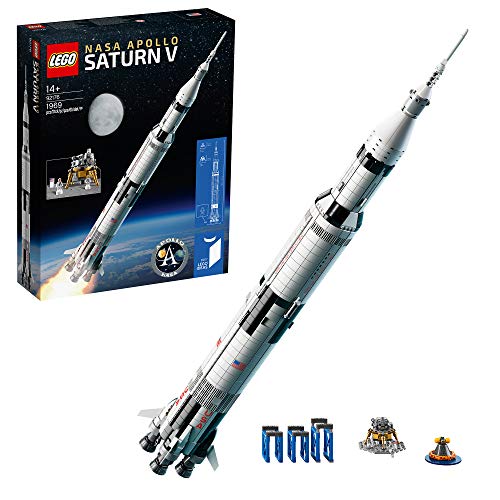
A 1,969-piece, 39-inch LEGO model of the Apollo moon rocket with removable stages, a lunar lander and display stands.
An 11-inch glass Galileo thermometer with five colored floats that rise and sink to show temperatures from 64 to 80 degrees F.
An 80 mm refractor telescope that uses a smartphone app to show on-screen arrows to planets, galaxies and star clusters - stargazing without the star charts.
Gift etiquette
Get a typical spending range for any relationship and occasion - and see what's actually expected.
See the latest price and full details on Amazon.
As an Amazon Associate we earn from qualifying purchases. This won't cost you anything extra.