

Gifts for Stargazers and Astronomy Lovers, From Star Wheels to Telescopes
Most stargazers want the same three things: more light-gathering, a way to find their way around the sky, and a way to keep their night vision once they are out there. These picks cover every level - a star wheel and a red flashlight for someone just learning the constellations, big binoculars and two very different telescopes for someone ready to see more, and the books and gadgets that make an existing scope more fun on every clear night.
Jump to the 10 picksMixed budgetsMixed
For StargazersFor Stargazers
HandpickedHandpicked
Updated September 2026Updated
We'll tell you when not to buy something. Every pick below lists its honest catch, and we say who should skip it. We'd rather talk you out of the wrong gift than push you toward a sale — how we choose.
Our 10 picks
Save to PinterestBest overall
#1
A 130 mm mirror on a simple tabletop base - more light than most first telescopes, and ready to use a few minutes after it comes outside.
The catch: It needs a sturdy table or stool to reach a comfortable height, the mirrors need collimating now and then, the view is inverted as with any reflector, and no carrying case or star diagonal is included.
Best app-guided telescope
#2
An 80 mm refractor that uses a phone app to point the way to planets and star clusters - the easiest start for someone who does not know the sky yet.
The catch: The app needs a fairly recent phone and an unlock code (good for up to 5 devices), the phone alignment can drift, and reviewers note a wobbly mount and a basic diagonal and Barlow.
Best binoculars
#3
Big 70 mm binoculars with a tripod adapter included - wide, two-eyed views of star clusters, the Milky Way and the Moon.
The catch: At 3 lb and 15x they are hard to hold steady by hand, so a tripod works best - the adapter is included, the tripod is not. They are water resistant rather than waterproof, and the listing may group several sizes, so check that 15x70 is selected.
Best observing guide
#4
The classic guide that shows what each object really looks like in a small telescope and exactly how to find it.
The catch: It is a large book - about 10 x 12 inches and 2.5 pounds - it is written for small telescopes rather than binoculars, and some current tables live on the publisher's companion web page.
Also worth a look
#5
The stargazing guide amateurs recommend to each other, updated in 2023 with new charts and chapters on equipment.
The catch: It is a large, flat format book made for a table or the hood of a car at night, not a pocket guide.
Best for beginners
#6
A two-sided star wheel: set the date and time and it shows the constellations overhead - no screen, no battery.
The catch: It is made for one latitude band - this one suits roughly the southern and middle US - it shows bright stars rather than telescope-level detail, and reading it outside needs a red flashlight.
Best under $20
#7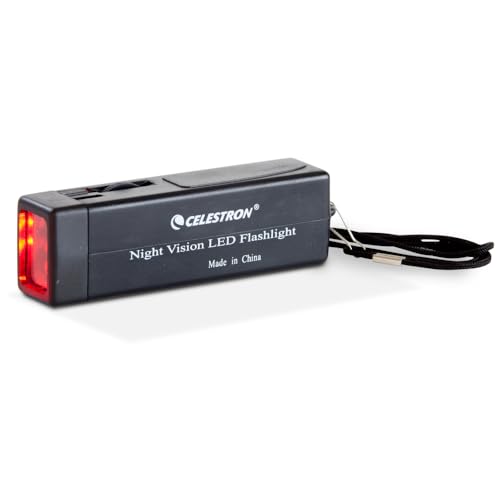
A dimmable red light for reading charts and swapping eyepieces without undoing half an hour of dark adaptation.
The catch: It is red only, with no white mode for general use, it runs on a less common 9V battery rather than a rechargeable cell, and the plastic case is not weather resistant.
Also worth a look
#8
Holds a phone steady behind the eyepiece, so the Moon's craters can be photographed and shared.
The catch: Bulky phone cases may have to come off, it adds 10 ounces at the eyepiece end of the scope, and phones wider than 90 mm will not fit.
Best for cloudy nights
#9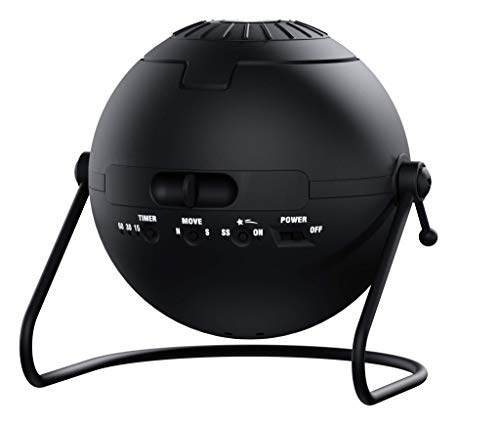
Projects more than 60,000 stars onto the ceiling - the night sky indoors when the real one is clouded out.
The catch: It is expensive, the finish shows dust and fingerprints, the buttons are not lit, and the rotation motor can be heard by light sleepers.
Also worth a look
#10
Custom Star Map Print
$16.99
A print of the sky exactly as it looked on a date and place that matters to them - wall art for a stargazer.
The catch: Personalized prints are non-returnable, so the date, place and spelling have to be right first time - and most arrive unframed, so budget for a frame.
Still looking?
Search every pick on the site
The Gift Finder filters all our ideas by who it's for, the occasion, their interests and your budget.
Shopping by price: Under $25Under $50Under $100
How to choose
Ask what they already own. A telescope owner needs accessories and guides, not a second telescope; someone with nothing yet should start with binoculars, a star wheel or one simple scope.
Aperture beats magnification. A telescope's reach comes from the size of its mirror or lens. Ignore big magnification numbers on the box and compare aperture instead.
Simple gets used. The best telescope is the one that comes outside on a clear night. Tabletop and app-guided designs set up in minutes; heavy, complicated mounts tend to stay in the closet.
Protect their night vision. A red flashlight and a paper chart let a stargazer read and adjust gear without undoing the 20 to 30 minutes their eyes need to adapt to the dark.
Questions people ask
Gift etiquette
Not sure how much to spend?
Get a typical spending range for any relationship and occasion - and see what's actually expected.
The weekly email
One gift guide a week
Every Thursday: one hand-picked gift guide and the week's new finds, each with the honest catch. Unsubscribe in one click.
More gift guides you'll like
As an Amazon Associate we earn from qualifying purchases.